Key points at a glance
- Platten- und Fliesenleger (tile and slab layer) is a combined craft with the ceramicist under § 94 no. 38 GewO. You need a Befähigungsnachweis (proof of competence) or a qualified managing director under trade law.
- Besides the master craftsman exam, the access regulation (Federal Law Gazette II no. 61/2003) names routes via an apprenticeship and several years of work as a self-employed person or in a senior position.
- Tiling businesses fall under the BUAG. Holidays and severance pay for your workers run through the BUAK (construction workers' holiday and severance fund), and its surcharges belong in every calculation.
- For waterproofing under tiles, ÖNORM B 3407 is the technical benchmark; the contract side is covered by the contract standard ÖNORM B 2207. Document every waterproofing job with photos.
- Tools and equipment for the start cost roughly €12,000 to €25,000 without a vehicle; large-format equipment comes on top.
This article is general information, not legal or tax advice. Rules change: check the details with your economic chamber or chamber of crafts, your trade guild or your tax adviser.
The trade licence: Keramiker; Platten- und Fliesenleger
The Gewerbeordnung (Trade Act) does not list tile laying as a separate trade, but as part of the combined craft "Keramiker; Platten- und Fliesenleger" (ceramicist; tile and slab layer, § 94 no. 38 GewO). You register the trade you carry out, i.e. "Platten- und Fliesenleger". The access regulation sets out separately for both parts which documents prove competence. For tilers they are:
- Certificate of the passed master craftsman exam
- at least six consecutive years as a self-employed person or business manager
- Apprenticeship certificate as tile and slab layer (or in a related apprenticeship of at least two years) followed by at least three years as a self-employed person or business manager
- recognised training for the craft of at least two years followed by four years as a self-employed person or business manager
- three years as a self-employed person and five years as an employee
- apprenticeship certificate followed by at least five years of trade-specific work in a senior position
Routes 2 to 5 are mainly intended for tilers who were already self-employed in another EU country. For journeymen from an Austrian business, the practical options are the master exam, route 6 as a crew leader or site manager, and the individual proof of competence under § 19 GewO. You apply for this at the trade authority with certificates, employment confirmations and references; the authority can also restrict the competence to certain activities.
BUAK: what tiling businesses do differently from painters
The Bauarbeiter-Urlaubs- und Abfertigungsgesetz (BUAG, Construction Workers Holiday and Severance Pay Act) expressly includes tile and slab laying businesses in its scope. If you employ workers, you register them with the BUAK and pay monthly surcharges for holidays, severance pay and, where applicable, winter holidays. Your workers' holiday entitlements then don't depend on your business, but move with them via the fund. For your pricing this means: a tiler's non-wage labour costs are higher than in trades without the BUAK obligation. Plan for the surcharges before you publish your first hourly rate.
Waterproofing: where most complaints come from
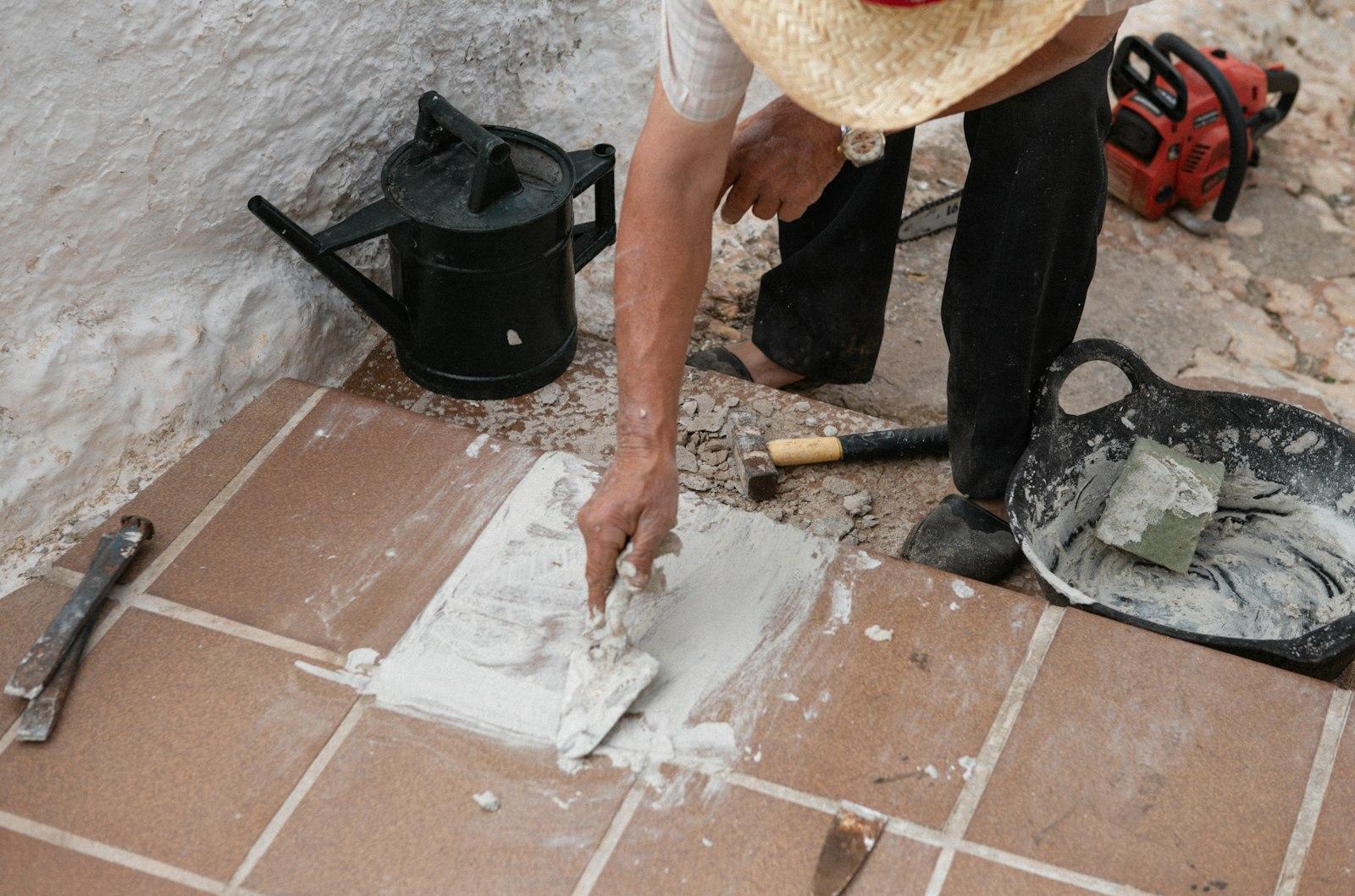
A leaking bathroom gets expensive: knock off the tiles, dry out, waterproof again, re-tile and pay for the damage in the flat below. For immovable property, the warranty period under § 933 ABGB (Civil Code) is three years, and many defects show up in exactly that period. For waterproofing bonded with tiles, ÖNORM B 3407 (planning and execution of tile, slab and mosaic work, current edition 2026-01-01) is the state of the art. ÖNORM B 2207 is the contract standard that governs scope of work, billing and acceptance if you agree it.
Documenting waterproofing properly
- Check the substrate before you start: evenness, moisture, strength, and write down the result
- Keep the product data sheets and system certificate of the waterproofing manufacturer
- Photograph sealing tapes, corners and penetrations before tiling
- Record layer thicknesses or consumption per m²
- Measure and document the fall towards the floor drain
- Hand over a handover report with care instructions for silicone joints (maintenance joints)
Tools, vehicle and storage
| Area | Examples | Approx. cost |
|---|---|---|
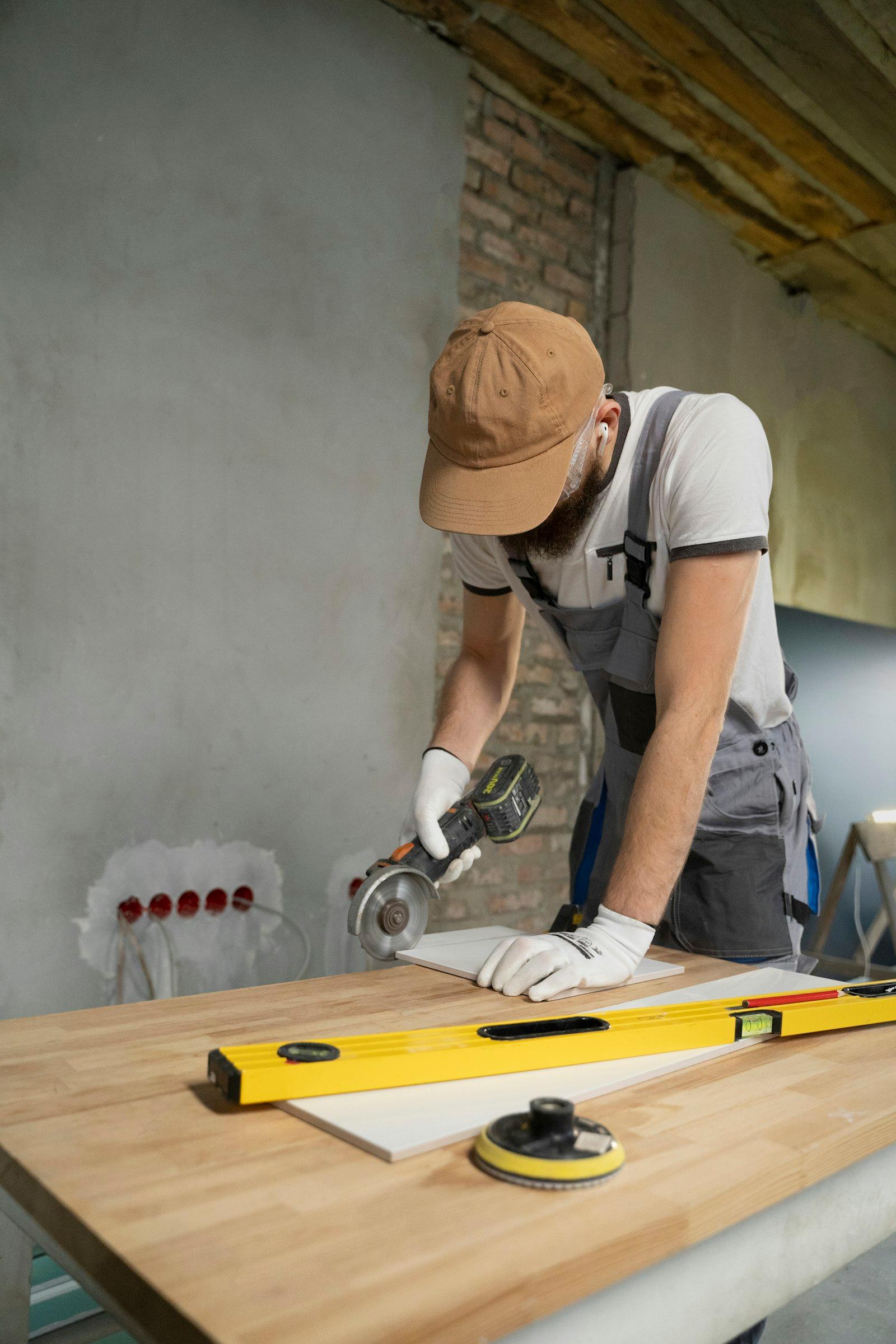
| Cutting | Tile cutter up to 120 cm, wet saw, angle grinder, diamond core bits | €3,000 to €6,000 |
| Mixing and laying | Paddle mixer, buckets, trowels, notched trowels, levelling system | €1,000 to €2,000 |
| Measuring | Cross-line laser, spirit level, moisture meter | €800 to €2,000 |
| Dust | Construction dust extractor of the right dust class, on-tool extraction, respiratory protection | €1,000 to €2,500 |
| Large format | Vacuum lifters, transport trolley, cutting system for slabs over 120 cm | €3,000 to €10,000 |
| Vehicle | Panel van with shelving, leased or used | from about €400 per month |
Cutting and grinding tiles and natural stone produces fine quartz dust. Work wet or with extraction at the source, and provide respiratory protection as soon as you have employees. A dry storage room for adhesive and grout is a must, because bagged products absorb moisture and become unusable.
Pricing, using a bathroom renovation as an example
A typical job: bathroom with 5 m² of floor and 20 m² of wall, walk-in shower, 30 × 60 cm tiles, material supplied by the customer through a tile dealer. The figures are assumptions for illustration; calculate with your own values:
| Work step | Time |
|---|---|
| Check substrate, prime, small levelling work | 6 h |
| Bonded waterproofing with sealing tapes and collars | 6 h |
| Shower area with fall and drainage channel | 8 h |
| Wall tiles 20 m² | 20 h |
| Floor tiles 5 m² | 6 h |
| Grouting, silicone, cleaning, handover | 8 h |
| Total | 54 h; at €60 net per hour about €3,240 plus small materials |
With large formats from 120 cm edge length, the effort rises considerably: two people for handling, a flatter substrate, more adhesive. Calculate a separate surcharge or separate items for this instead of copying the price per m² of the standard format. And if you supply the material yourself, factor in breakage, offcuts and your purchasing time.
How to get it right
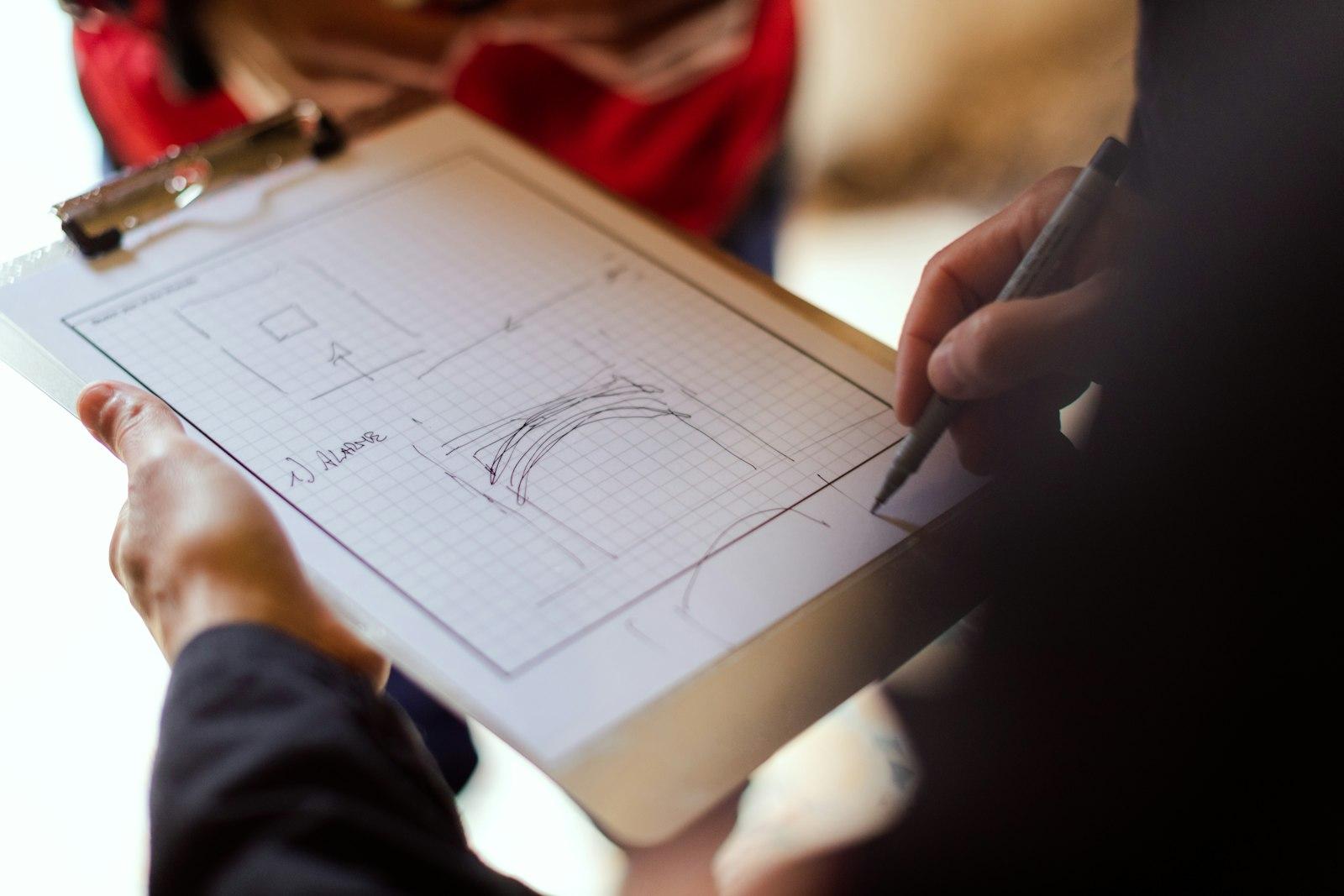
- Take measurements on site and note wall heights, niches and pre-wall installations
- List waterproofing as a separate item in the quote
- Take before-and-after photos for your references, with consent
- Agree the sequence with the plumber and the drywall team
Better not
- Laying on damp screed because the deadline is pressing
- Offering large format at the standard price
- Working as a "subcontractor" for other businesses without a trade licence
- Selling silicone joints as permanently watertight
Show your bathroom references online
We build you a free draft of your tiler website in 3 days, with a gallery for your bathrooms and an enquiry form.
A free draft of your future business website.
Registration and start: the final steps
You register the trade online via GISA or at the Bezirkshauptmannschaft or Magistrat. After that you are a member of the Landesinnung der Hafner, Platten- und Fliesenleger und Keramiker (regional guild of stove fitters, tilers and ceramicists), socially insured with the SVS, and you report the opening to the tax office. Business liability insurance that also covers consequential water damage is part of the basic equipment. The general start-up steps are in Starting a business in Austria, the mandatory details for your website in Mandatory details in Austria. How to win new jobs with photos of finished bathrooms is shown in the post References and reviews.
Sources
- RIS – Gewerbeordnung 1994, § 94 (regulated trades)
- RIS – access requirements for Keramiker and Platten- und Fliesenleger
- RIS – Platten- und Fliesenleger/in-Ausbildungsordnung (training regulation)
- RIS – Gewerbeordnung 1994, § 19 (individual proof of competence)
- RIS – ABGB, § 1168a (duty to warn)
- RIS – ABGB, § 933 (warranty period)
- WKO – BUAG: scope
- WKO – fees for master and qualifying exams
- Austrian Standards – ÖNORM B 3407:2026-01-01
- GISA – Gewerbeinformationssystem Austria